
Can Laminated Certificates Affect Your Student Visa Approval? Complete Guide for Students
Worried about laminated certificates for your student visa? Learn how lamination can affect visa approval, real embassy rules, and how digital verification & 360° documentation help students stay safe.
ABROAD JOB APPLICATIONS
Viral Gala
12/6/20254 min read
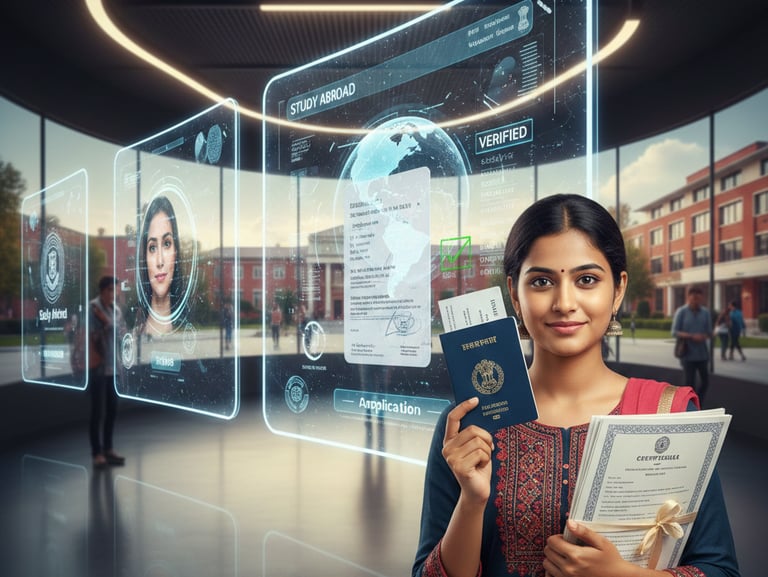
🎓 Can Laminated Certificates Cause Student Visa Rejection? The Complete Truth
When you're preparing for a student visa application, that mountain of documents—mark sheets, degrees, transcripts—can feel overwhelming. You want to protect them, which is why laminating them seems like a great idea.
But here’s the painful truth that worries many applicants: Can laminated certificates cause problems with your visa?
⚠️ The Short Answer: Yes, they absolutely can, and it's a risk you should avoid.
While not every laminated document automatically leads to a rejection, the risk of delays, document refusal, or being marked "incomplete" is high. Let’s break down exactly why embassies are strict about this and what your safest path forward is.
📄 1. Why Embassies See Lamination as a Red Flag
Embassies and universities are dealing with crucial legal documents, and their first priority is verification. When you laminate a document, you inadvertently create barriers to authenticity checks:
Security Features are Hidden: Original certificates often contain watermarks, embossed seals, official stamps, or micro-printing. Lamination flattens, obscures, or hides these vital physical security features, making verification impossible.
Tampering Concerns: Visa officers need to feel the paper and inspect it under various lights. Lamination raises doubts of tampering or forgery because it prevents them from verifying if the document has been altered and re-sealed.
The Need for Stamping: Many government agencies, especially for attested copies, need to apply their own stamp or seal directly onto the original document (or its verified copy). Lamination prevents this required action.
As one article notes, lamination is often viewed as a form of alteration itself, which can lead to serious delays or even denial. For more context on the general risks of laminating vital records, check out this relevant Reddit discussion on Document Lamination.
❌ 2. The Real Risk of Visa Delays and Refusal
Even if your certificate is 100% genuine, the perception of a problem is enough to disrupt your application.
In countries with stringent visa checks (like the USA, Canada, UK, Australia, and Germany), laminated documents can lead to:
Document Refusal: The visa officer may simply refuse to accept the document, marking your application as “Incomplete.”
Verification Delays: The embassy will spend extra time trying to verify your educational background, leading to significant processing delays that could affect your intake start date.
Attestation Issues: If you need further attestation from an external body (like for employment visas later on), having a laminated original can make the attestation process impossible, as highlighted by many students on forums like Yocket discussing laminated mark sheets.
✅ 3. What to Do If Your Certificates Are Already Laminated
Don't panic! This is fixable, but it requires immediate action:
Never Peel It Yourself: Attempting to peel off the lamination is highly likely to destroy the paper and ink underneath.
Contact Your Institution: Go directly to your school, college, or university and request:
Duplicate original, non-laminated certificates.
Official, sealed transcripts (these are generally preferred by universities abroad anyway).
Attested photocopies made from the laminated original, where the school/college verifies the copy's authenticity with their official stamp on the new document.
Get Notarized Copies: Always obtain notarized, high-quality photocopies of your laminated documents.
Digitize Securely: Maintain multiple high-resolution digital backups (scans) of all your documents, both laminated and new.
🌐 4. The Digital Safety Net: Future-Ready Documentation
The best way to eliminate these physical document risks is by leveraging digital verification. Embassies and institutions are rapidly moving towards systems that rely on:
High-resolution document scans and digital submissions.
Cloud-based verification systems (like Digilocker).
Online document submission and secure digital profiles.
This is where immersive digital platforms, like the solutions we build at 360 VR Photography, help bridge the gap.
🚀 5. How 360 VR Photography Supports International Student Safety
Our focus is on creating a digitally trusted environment for international education, ensuring students and institutions can verify everything virtually:
360° Virtual Campus Tours: Students can virtually experience the institution before applying, reducing the need for costly physical visits.
VR-based Admission Experiences: Immersive tools and interviews that reduce reliance on physical papers.
Digital Documentation Walkthroughs: Secure systems that guide students through the complex document submission process.
By moving towards secure digital proof and immersive verification systems, we help both students and institutions minimize document-related risks, delays, and anxieties.
🧠 6. Final Student Safety Tips
Avoid the document panic entirely by following these tips:
Keep Non-Laminated Originals: Always store your original degree and mark sheets in a clear plastic sleeve or document folder, not lamination.
Verify Rules in Advance: Before submitting, always verify the specific document requirements of the embassy (US, UK, Canada, etc.) and the university.
Avoid Fake Services: Only use authorized agents and notarization services. The risk of submitting fraudulent documents—even unintentionally—is grounds for immediate, permanent visa refusal.
💡 Frequently Asked Questions (FAQ)
Q: Can I laminate a copy instead of the original? A: Yes! It is highly recommended to keep the original document in a plastic sleeve and laminate a high-quality, color photocopy for daily use or showing to agents. Only the original document should be kept non-laminated.
Q: What if my university provided the certificate already laminated? A: This is rare but possible, especially with older certificates. In this case, you must request an official, non-laminated duplicate or obtain a fresh set of sealed transcripts directly from the university's Registrar/Controller of Examinations. The visa officer trusts the issuing body's sealed transcript more than the laminated original.
Q: Do virtual campus tours actually affect visa approval? A: While a virtual tour doesn't directly influence the document check, utilizing VR-based campus previews (like a Google Map Virtual Walkthrough) demonstrates to the visa officer that you have done thorough research and have a Genuine Temporary Entrant (GTE) intent to study at that specific campus.
🤝 Let’s Build the Future of Education Together
Yes, laminated certificates can affect your student visa approval—it’s an unnecessary risk in a high-stakes process. By embracing secure digital and immersive solutions, students can move towards a safer, faster, and future-ready admission process.
Contact Viral Gala
Company: 360 VR Photography
Phone/WhatsApp: +91 9920322366
Websites: 360vrphotography.com and 360vrphotography.in
