
How to Remove Lamination from Degree Certificates Safely: A Complete Guide to Protect Your Original Documents
Learn how to remove lamination from degree certificates safely without damaging your original document. Discover why DIY methods are risky and how Spandan Lamination Remove Service provides professional, damage-free lamination removal across India.
ABROAD JOB APPLICATIONS
Viral Gala
7/13/20266 min read
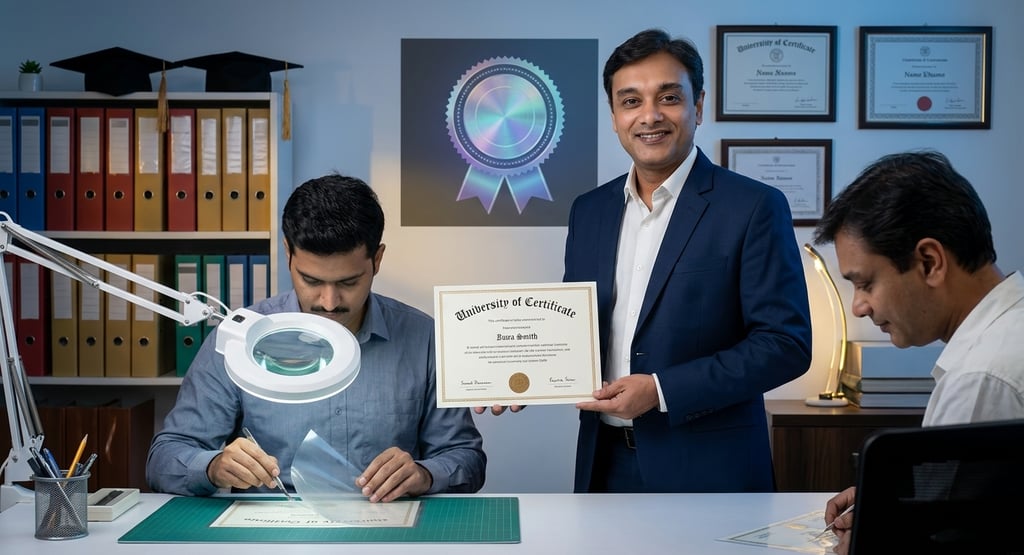
How to Remove Lamination from Degree Certificates Safely: Expert Solutions to Protect Your Original Documents
SEO Title: How to Remove Lamination from Degree Certificates Safely | Professional Document Delamination
SEO Meta Description: Need to remove lamination from your degree certificate without damage? Learn why DIY methods are risky, when professional lamination removal is necessary, and how Spandan Lamination Remove Service helps students and professionals safely restore original certificates across India.
SEO URL Slug: how-to-remove-lamination-from-degree-certificates-safely
Focus Keywords: Remove Lamination from Degree Certificate, Certificate Lamination Removal, Remove Lamination Safely, Original Certificate Restoration, Delamination Service India, Marksheet Lamination Removal, Degree Certificate Repair, Spandan Lamination Remove Service
Introduction: The Academic Investment Under Wraps
Your university degree certificate or board marksheet is far more than an everyday piece of paper—it is the physical culmination of years of hard work, financial investment, and personal dedication. Naturally, when these vital credentials finally arrive in your hands, your immediate instinct is to shield them from the elements. To prevent accidental fluid spills, staining, dust accumulation, and tearing, millions of families head straight to local print shops to seal their hard-earned records in thick plastic lamination.
While sealing your credentials seems like a logical way to preserve them, it frequently turns into a major administrative roadblock later in life.
The moment you prepare to transition onto the global stage—whether applying for an advanced master's program via World Education Services (WES), securing an IT work permit in Germany, or filing an Express Entry profile for Canadian permanent residency—your laminated files will encounter an immediate halt. International evaluation agencies and embassies routinely reject laminated documents.
Understanding the strict forensic standards used during credential authentication shows why keeping a raw, unlaminated paper trail is crucial to securing your next big milestone.
Why Are Non-Laminated Original Certificates Strictly Required?
When you submit academic files for global evaluation, background teams do not simply scan the text on the page; they verify the physical document itself. According to official guidelines detailed on the World Education Services (WES) Platform, credential verification analysts require fully accessible original documents to ensure the absolute legitimacy of foreign qualifications.
On highly active global mobility forums like r/immigration on Reddit, skilled expats consistently warn that plastic lamination acts as an immediate red flag for verification officers for several operational reasons:
Tactile Embossed Seals: Authentic certificates feature raised, textured university stamps pressed directly into the heavy cardstock. Lamination flattens these variations, preventing officers from executing mandatory touch and texture audits.
Anti-Fraud Security Features: Premium university degrees contain hidden security patterns, fine-line microtext, and chemical watermarks that react uniquely under ultraviolet (UV) light. Rigid plastic coatings cause intense light glare and refraction, completely blinding automated forensic imaging tools.
Mandatory Physical Attestation Placement: If your visa route requires formal state department apostille or embassy verification stamps, officials must apply wet inks and high-security adhesive validation stickers directly onto the raw back side of the original paper. Glue and ink cannot adhere to slick lamination plastic, resulting in immediate rejections at the consular window.
[Laminated Degree Certificate] ➔ Creates Intense Light Glare ➔ Blinds Forensic Scanners ➔ Document Rejected [Safely Delaminated Original] ➔ Restores Tactile Textures ➔ Accepts Wet Ink Stamps ➔ Flawless Visa Approval
The Extreme Danger of "Do-It-Yourself" Home Delamination
When international applicants discover that a laminated marksheet is holding their entire career or study visa hostage, panic often sets in. Many turn to quick internet hacks that suggest melting or peeling the plastic off at home using household clothing irons, hair dryers, boiling kettles, razor blades, or acetone.
Document preservationists strongly warn against these uncalibrated methods.
Commercial hot lamination does not simply sit on top of your degree; the process uses high-pressure heated rollers to liquefy a synthetic polymer glue, forcing it deep into the open, microscopic pores of the paper fibers. Over the years, this adhesive hardens and undergoes chemical degradation.
If you attempt to pull or scrape the plastic off manually, the fused glue forcefully pulls the paper fibers apart internally. This creates surface delamination, lifting your grades, gold-foil university logos, and registrar signatures clean off the document and leaving them stuck to the discarded plastic sleeve. Once an original certificate is defaced, you face a grueling bureaucratic pipeline of filing police reports, signing court affidavits, and waiting months for a university board to issue a duplicate degree.
Production Prompts for Content Creators
If you are a content creator, education consultant, or immigration marketer looking to build visual media around this topic, use these production-ready asset prompts:
7-Second Voiceover Script: "Your original certificate deserves expert care. Spandan Lamination Remove Service removes lamination safely, helping protect your future with trusted professional document restoration."
The Calibrated Thermodynamic Process: How Spandan Restores Your Records
To preserve irreplaceable, one-of-a-kind educational history, physical force and household heat must be bypassed entirely. At Spandan Lamination Remove Service, we use highly calibrated, non-invasive thermodynamic separation systems to return your documents to their original, embassy-ready state.
Our professional delamination workflow moves through four precise stages:
Initial Micro-Fiber Assessment: Before beginning any procedure, our restoration specialists inspect the age of the paper, ink stability, and adhesive condition under specialized lighting to determine the safest customized approach.
Controlled Thermodynamic Separation: Our advanced systems apply a highly regulated energy field to target the exact molecular melting point of the underlying polymer glue. This cleanly liquefies the adhesive bond without ever reaching temperatures that could scorch paper or fade sensitive inks.
Zero-Tension Film Removal: Once the adhesive bond is completely loosened, the outer plastic sleeves separate naturally and lift away effortlessly, ensuring there is absolutely zero pulling, stretching, or tearing of the fragile paper fibers.
Archival Residue Cleaning: Any remaining sticky chemical film is gently cleared using safe, non-aqueous solutions, leaving your original degree certificate clean, matte, and fully prepared for strict embassy scanning.
Connecting Digital Innovation with Physical Protection
As you optimize your professional credentials for international opportunities, you will notice that the corporate world is digitizing just as fast. Once your original documents pass strict physical attestation checks, your business profile will move into modern environments where spatial computing leads the industry.
At our sister division, 360 VR Photography, we build the immersive digital twins, VR industrial safety training modules, and interactive virtual factory walkthroughs that modern enterprises use to connect with global clients. By working with us, you ensure your physical paperwork is flawlessly protected by Spandan, while your digital presence is dramatically elevated into the future of Industry 4.0.
Practical Tips to Protect Your Documents Without Lamination
Instead of permanently sealing original certificates in risky commercial plastic pouches, professional archival guidelines recommend alternative, non-destructive storage methods:
Archival-Quality Polypropylene Sleeves: Keep your degrees inside acid-free, top-loading protectors. This shields your files from dust and moisture while allowing verification officers to easily slide the raw paper out for manual inspection.
Rigid Waterproof Folders: Store your career portfolio flat inside a heavy-duty, weather-resistant briefcase fitted with moisture-absorbing silica gel packets to prevent mold growth.
High-DPI Digital Scans: Maintain a high-resolution, 600 DPI digital backup of all your unlaminated originals across secure cloud servers, ensuring you are always ready for initial online submissions.
Recommended Viewing
Before risking your educational records on an untrusted home method, watch a live breakdown of how strictly verification networks examine physical paper.
Search on YouTube: Look for "Matterport Factory Virtual Tour Demo" to witness advanced 360-degree digital mapping pipelines, or search for "WES document submission guidelines for India" to see firsthand why keeping your original raw paper completely intact is mandatory for international success.
Frequently Asked Questions (FAQ)
Q1: Why do credential evaluation agencies like WES reject laminated certificates?
A: WES and international verification bodies require raw paper access to authenticate anti-fraud markers. Plastic coatings completely distort the texture of paper fibers, create blinding glare under forensic cameras, and cover embossed university seals, making complete authentication impossible.
Q2: Can lamination be safely removed if the plastic has already turned yellow, bubbled, or cracked?
A: Yes. Yellowed or cracked plastic indicates that the lamination has become highly acidic and brittle, which significantly weakens the paper beneath. Our thermodynamic process targets only the adhesive bond, removing the plastic smoothly without applying any tearing force to fragile paper.
Q3: How can I send my laminated degree to Spandan safely if I live outside of Gujarat?
A: We manage high-security, doorstep document logistics across India. We partner directly with trusted networks like Blue Dart to arrange secure courier collection right from your home or office. Your documents are tracked transparently, restored safely by our experts, and securely shipped back with tracking.
Lock In Your Global Future: Contact Spandan Today
Your educational certificates represent a lifetime of dedication, hard work, and personal achievements. Do not gamble with your career milestones by testing risky internet home hacks. Let our specialized team restore your files to pristine, embassy-ready condition safely.
Founder & Immersive Professional: Viral Gala
Company Name: Spandan Lamination Removal Services
Direct Call / WhatsApp: +91 99203 22366
Official Website: howtoremovelamination.com
Immersive Portals: 360vrphotography.in | 360vrphotography.com
Physical Processing Hub: Shop No - 29/A, ATC Trade Centre, Opp. Adalaj Step Well, Adalaj, Ahmedabad - 382421, Gujarat, India.