
Why Educational Certificates Should Never Be Laminated | Expert Guide for Students & Professionals
Discover why educational certificates should never be laminated and how lamination can create issues during visa applications, embassy verification, university admissions, and document authentication. Learn how Spandan Lamination Remove Service helps restore important documents safely.
REMOVE LAMINATION
Viral Gala
6/2/20265 min read
Introduction: A Well-Intentioned Mistake
An educational certificate represents years of hard work, sleepless nights, and hard-earned achievements. Whether it is a high school mark sheet, a university degree, a diploma, or a professional licensing qualification, these pieces of paper are the literal keys to your future career.
Naturally, when such an irreplaceable document arrives, your first instinct is to protect it. To shield it from accidental spills, dust, tearing, and the natural yellowing that comes with age, many parents and students head straight to a local copy shop to have it professionally laminated.
It seems like the ultimate protective measure, right? Unfortunately, what looks like an impenetrable shield today can quickly mutate into a bureaucratic nightmare tomorrow.
As global security tightens, international universities, foreign embassies, immigration departments, and credential verification agencies are enforcing incredibly strict rules regarding document integrity. When the time comes to apply for a student visa, move overseas, or verify credentials for a global corporate role, a laminated certificate can completely stall your progress.
Why the Local Print Shop Approach Backfires
People usually laminate certificates for completely practical reasons:
Shielding the paper against accidental water damage or humidity.
Preventing fraying edges, tears, or accidental folding during transit.
Attempting to lock in and preserve older, fragile paper.
Giving the document a clean, glossy, premium appearance.
While these intentions are completely logical, the industrial lamination process permanently alters the physical state of the paper. It traps the document beneath a layer of melted polymer adhesive, completely sealing it off from the specialized physical and visual audits required by verification authorities.
The Real Complications of Laminated Papers
1. Severe Delays During Visa Applications
When you apply for a student visa, work visa, or a permanent residency pathway, embassy officials do not just read the text on your certificates; they perform a meticulous forensic audit. According to established standards in Identity Document Security on Wikipedia, a document's raw physical properties are essential for proving it is genuine.
Consular officers need to physically touch and verify the page. Lamination acts as a plastic barrier that completely blocks an officer from checking these vital indicators, instantly raising a red flag.
2. Rejections by Global Universities and Evaluation Services
International universities and premium evaluation boards (such as WES) frequently explicitly state on their application checklists that they require "Original, Non-Laminated Documents." Because a plastic layer can easily mask altered text, color manipulation, or fraudulent printing, evaluation boards often reject laminated files out of hand.
On major global education and immigration hubs like r/studyabroad on Reddit, countless students share stressful accounts of being turned away at their verification interviews, forced to rapidly apply to their home universities for a duplicate original—a stressful administrative process that can take weeks and cause them to completely miss their enrollment windows.
[Laminated Document] ➔ Blocks Tactile Verification ➔ Triggers Embassy Rejection ➔ Forced to Request Duplicate Originals (Weeks of Delay)
3. Hidden Security Features Become Blocked
Modern academic degrees are embedded with high-tech, anti-counterfeiting measures. These sophisticated elements include:
Embossed gold-foil seals and raised ink stamps that must be physically felt.
Subtle structural watermarks and metallic security threads embedded in the paper fibers.
Micro-print borders and invisible UV markings that glow only under specific light wavelengths.
The dense plastic used in standard lamination pouches distorts light paths, diminishes the visibility of holograms, and completely blocks access to tactile embossing.
4. Scanning, Glare, and Digitization Failures
In our increasingly digital world, most initial document screenings are performed by automated software or high-resolution scanners. Laminated surfaces act like mirrors, creating intense glare and light reflections under scanning beds. This results in blurred text, unreadable barcodes, and distorted signatures, causing automated university portal systems to reject your uploaded files.
5. Catastrophic, Long-Term Paper Destruction
Lamination is not an inert, permanent fix. Over time, the chemical composition of the cheap hot-melt glue used in standard pouches reacts poorly with ambient heat and humidity. The document can begin to develop trapping air bubbles, severe cloudiness, yellow discoloration, and peeling edges. Instead of protecting your certificate, the plastic can slowly degrade and chemically stain the paper fibers trapped beneath it.
The Extreme Danger of "Do-It-Yourself" Removal
When students discover that a laminated document is unacceptable for their upcoming visa appointment, panic often sets in. Many attempt to peel the plastic off at home using household items like clothing irons, hair dryers, razor blades, or chemical solvents. This is an incredibly dangerous gamble.
The industrial glue used during lamination deeply fuses with the organic fibers of the paper over time. If you apply uncontrolled household heat or try to slice the plastic away manually, the adhesive will stubbornly tear up the paper fibers, pull off signatures, smudge wet-ink stamps, and completely shred the face of your degree. Once an original certificate is physically torn or defaced, it is permanently ruined and legally invalid.
How Advanced Technology Safely Restores Your Paperwork
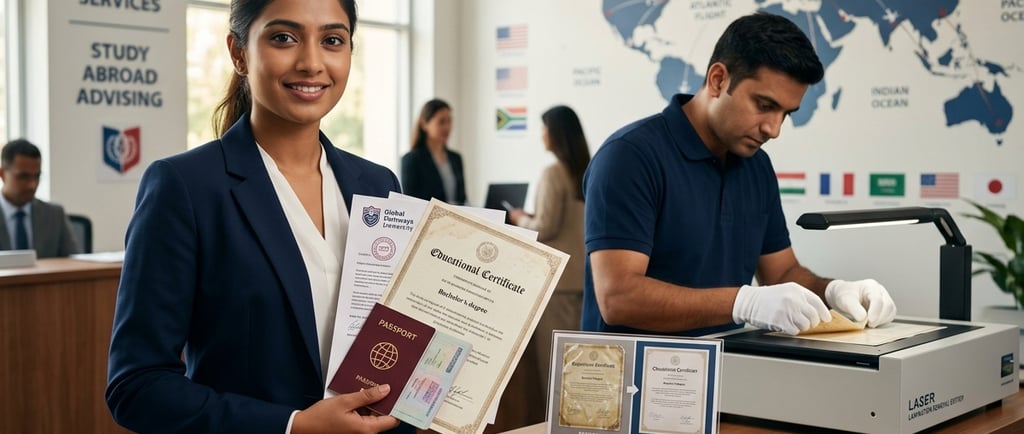
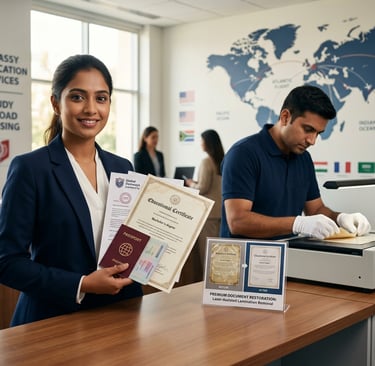
To save your irreplaceable documents from catastrophic damage, you must steer completely clear of aggressive mechanical peeling. At Spandan Lamination Remove Service, we utilize highly calibrated, professional thermodynamic and laser-assisted restoration techniques to isolate and remove the plastic layers safely.
Our specialized systems focus energy precisely onto the synthetic adhesive layer. This process guarantees:
Calibrated Temperature Control: We liquefy the hardened industrial glue without altering or fading the underlying inks, board stamps, or signatures.
Zero Fiber Tension: The plastic backing separates and slides away effortlessly, ensuring there is absolutely zero pulling or scratching on the delicate face of the paper.
Complete Residue Removal: Your document is restored beautifully to its original, raw paper form, entirely free of sticky adhesive films and fully ready for official consulate scanning.
Smart and Safe Ways to Protect Documents Instead of Laminating
You can easily protect your critical academic portfolio from environmental wear and tear without compromising its legal validity by using these smart alternatives:
Archival Polypropylene Sleeves: Slide your certificates into clear, acid-free, top-loading protective sleeves. This shields them from dust and fingerprints while allowing officers to easily slide the raw paper out for a tactile audit.
Waterproof Accordion Portfolios: Store your records flat inside a heavy-duty document briefcase fitted with small, moisture-absorbing silica gel packets to prevent mold.
High-Resolution Digital Backups: Scan your clean, unlaminated certificates at a crisp 600 DPI, saving copy files in secure cloud systems for seamless online uploads.
Recommended Watching
Before compiling your official visa or university application folder, check out professional overviews of international document verification procedures.
Search on YouTube: Look for "VFS Global Document Submission Guidelines" or "How to handle original certificates for embassy verification" to see firsthand how strictly international verification centers evaluate your physical paperwork.
Frequently Asked Questions (FAQ)
Q1: Can lamination be safely removed from very old or fragile board mark sheets?
A: Yes. Brittle or aged paper requires specialized, careful handling. Our advanced laser-assisted technology is uniquely suited for delicate records because it dissolves the adhesive layer completely through thermal calibration, removing the need for physical force or pulling.
Q2: What should I do if an embassy has already flagged my degree because it's laminated?
A: Do not panic and try to tear it open at home. A flagged document can still be completely saved. Our professional restoration service can safely remove the plastic and restore the original paper to its pristine state within days, ensuring it easily passes subsequent consulate reviews.
Q3: Will the lamination removal process smudge my principal’s or registrar's signature?
A: No. Our precision systems are carefully calibrated to target the specific melting point of the outer industrial adhesive without affecting the chemical structure or stability of underlying fountain pen inks, printed text, or official stamps.
Secure Your Global Career Milestones: Contact Spandan Today
Do not let a protective layer of plastic stand between you and your international education or career dreams. If you or your clients have laminated certificates that need to be prepared for university admissions, embassy attestation, or visa scanning, trust our professional team to restore them safely.
Founder: Viral Gala
Company Name: Spandan Lamination Removal Services
Contact Number: +91 9920322366
Websites: howtoremovelamination.com | 360vrphotography.com | 360vrphotography.in
