
Why Educational Certificates Should Never Be Laminated | Safe Document Protection Guide
Learn why educational certificates should never be laminated and how lamination can create problems during visa processing, embassy verification, and university admissions. Discover professional document restoration solutions from Spandan Lamination Remove Service
ABROAD JOB APPLICATIONS
Viral Gala
5/21/20265 min read
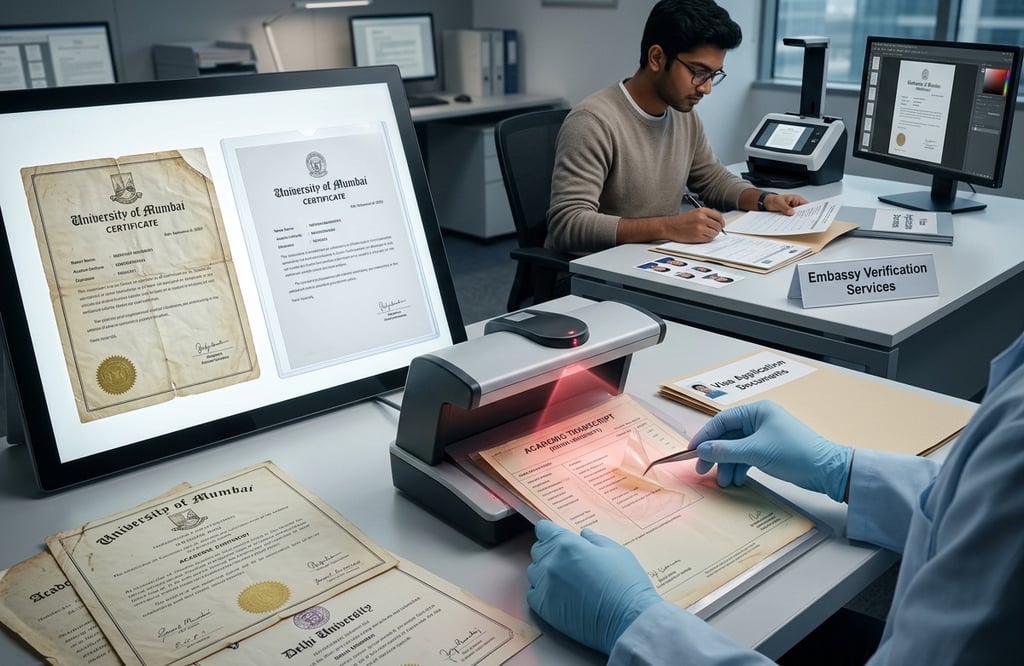
Why Educational Certificates Should Never Be Laminated
The Hidden Risks of Laminating Important Academic Documents
Why Educational Certificates Should Never Be Laminated | Safe Document Protection Guide
Introduction: A Common Mistake That Can Create Serious Problems
It is a proud moment for any student or parent when a hard-earned degree, board mark sheet, or passing certificate arrives. Naturally, your immediate instinct is to protect it. To shield it from water damage, dust, tearing, and the natural yellowing of age, many people head straight to the nearest print shop to have the document professionally laminated.
While sealing your credentials in a thick, glossy layer of plastic seems like a smart way to preserve them, it is actually one of the most common mistakes an applicant can make. It frequently leads to major complications later in life, especially when applying for:
International student visas and global migration programs
Admissions to foreign universities or elite credential evaluation services
Government jobs and strict civil service board reviews
Legal verification, apostille services, and embassy authentication
The truth is that many educational institutions, corporate recruiters, and global consulates specifically mandate original, non-laminated documents for authentication. Unfortunately, most students only discover this hidden barrier at the absolute worst time—right when an important university application deadline or visa interview window is closing.
At Spandan Lamination Remove Service, we use advanced, professional precision lamination removal techniques to safely free your irreplaceable academic credentials from plastic, completely restoring their official usability.
Why Laminating Educational Certificates is Risky
An official academic document is much more than text printed on standard paper. It functions as a secure legal certificate containing intricate security layers designed to prevent counterfeiting.
According to global verification standards outlined in Identity Document Security on Wikipedia, official bodies rely on specialized features to verify that a document is genuine. Permanently sealing a certificate under a melted polymer pouch interferes with these security features, making formal authentication nearly impossible.
The Primary Problems Caused by Lamination
1. Severe Embassy and Visa Verification Issues
During an immigration or visa review, consular officers do not just look at a certificate; they physically audit it. They need to feel the paper texture, trace the edges of wet ink stamps, and inspect embossed seals, holographic markers, and hidden watermarks.
Furthermore, industrial plastic pouches create intense glare under modern, high-definition scanning beds. This reflection distorts text, blurs vital security barcodes, and triggers automated system failures, which can instantly stall your student visa or immigration application.
2. Outright Rejection by International Universities
Many universities and credential evaluation agencies (such as WES) explicitly state on their checklists that they require "Original, Non-Laminated Documents." Because plastic covers hide the physical properties of paper, evaluators treat laminated files as potential tampering risks. If your documents are sealed, you may be forced to obtain duplicate originals or official university affidavits, costing you significant time, money, and potentially your admission spot.
3. Irreversible Heat and Chemical Degradation
Lamination is not an inert protective bubble. Over time, the chemical solvents within the industrial adhesive interact with the paper fibers and ink. Changes in ambient temperature can cause the plastic to develop bubbling, severe yellowing, cloudiness, or edge peeling. Instead of protecting your certificate, the plastic can slowly degrade the paper quality underneath.
[Laminated Document Layer] ➔ Industrial Adhesive Traps Moisture ➔ Trapped Solvents Degrade Paper over Time ➔ Clouding & Incurable Discoloration
4. The Extreme Threat of DIY Lamination Removal
When applicants find out that their laminated certificates are unacceptable, many panic and try to peel the plastic off at home using scissors, utility blades, or standard clothing irons. This almost always ends in disaster.
The hot-melt glue used in lamination deeply fuses with the paper fibers. Pulling it away manually forces the plastic to rip away critical signatures, lift up official ink stamps, tear off gold-foil seals, and completely shred the face of your irreplaceable academic degree.
Why Professional Lamination Removal is Absolutely Crucial
To preserve fragile, one-of-a-kind academic papers, you should never rely on aggressive mechanical peeling or uncontrolled household heat. At Spandan Lamination Remove Service, we use specialized, highly calibrated thermal and laser-assisted procedures to gently liquefy the hardened industrial glue. This allows us to smoothly slide the plastic away without placing any structural tension on the paper or damaging official signatures, delicate ink stamps, or security watermarks.
We regularly help students and professionals safely restore:
High school (SSC/HSC) and central board mark sheets
University Bachelor's, Master's, and Doctoral degrees
Government-issued birth, marriage, and nationality certificates
Official migration papers and police clearance certificates (PCC)
On international education discussion portals like r/ImmigrationCanada on Reddit, users frequently point out how strict border services and evaluation boards are regarding original paper quality. Using a professional restoration service ensures your files pass rigorous physical audits with zero issues.
Smart and Safe Ways to Protect Your Certificates Instead of Laminating
You can keep your critical original paperwork safe from environmental damage without compromising its legal validity by using these embassy-approved alternatives:
Archival Polypropylene Sleeves: Slip your certificates into clear, acid-free, top-loading plastic protectors. This keeps dust and fingerprints away while allowing officers to easily slide the raw paper out for a physical inspection.
Waterproof Accordion Portfolios: Store your academic records flat inside a heavy-duty, multi-pocket document briefcase fitted with moisture-absorbing silica gel packets.
High-Resolution Digital Vaults: Scan your clean, unlaminated certificates at a minimum of 600 DPI. Store these digital copies securely in cloud environments for seamless electronic submissions.
Recommended Watching
Before you take any risks with your original certificates, it is incredibly helpful to see exactly how strictly international validation centers evaluate your physical files.
What to search for on YouTube: We highly recommend searching for "WES Document Submission Guidelines" or "How to prepare documents for visa verification" to see firsthand why pristine, unlaminated papers are vital for international career paths.
Frequently Asked Questions (FAQ)
Q1: Will professional lamination removal cause my degree's ink or signatures to fade?
A: No. Our specialized restoration equipment targets the precise thermodynamic melting point of the outer polymer adhesive without affecting or altering the stability of underlying fountain pen inks, printed text, or official stamps.
Q2: What happens if an embassy rejects my document because it's laminated?
A: You will typically be issued a deficiency notice, giving you a tight window to present an unlaminated original. Rather than going through the lengthy, stressful, and expensive process of applying to your home university for a duplicate original, professional lamination removal can safely salvage your current document within days.
Q3: Can lamination be removed from old or brittle certificates?
A: Yes, but old or damaged paper requires an expert hand. Our team evaluates the fiber health of aging certificates prior to restoration, tailoring our precision processes to ensure the document is returned to its raw, authentic state completely intact.
Protect Your Academic Investments: Contact Spandan Today
Do not let a protective sheet of plastic stand between you and your global career milestones. If you or your clients have laminated certificates that need to be prepared for an embassy interview, foreign university admission, or apostille verification, trust the professionals to restore them safely.
Founder: Viral Gala
Company Name: Spandan Lamination Removal Services
Contact Number: +91 9920322366
Websites: howtoremovelamination.com | 360vrphotography.com | 360vrphotography.in
